Today, I am blogging and all I can think about is how much I love the smell of oranges. When I peel an orange, my whole world can brighten; the sunny, deep citrus colour that wipes away the odours of the past. Sometimes I wish life could be as easy as this: peeling away the rough, bitter skin then sinking my teeth into the sweetness of life - leaving behind the rinds of unhappy memories to embrace the road ahead. The uncertain road ahead that always beckons me, twisting and winding up the mountains, through the trees and onto snow covered trails.
The Child and the Woman
I once dreamed that I landed on a beach: white sand, sky so blue, I could inhale it into my lungs, but the stillness was strangely eerie. I walked up this beach and I began to see dead bodied lying all over the place: bodies of young men and women cut down at the prime of their life. I began to run towards a house, but when I opened the door, all I found were dead bodies and blood everywhere. I was terrified. Everyone was dead. I began to cry uncontrollably. In the middle of my tears, a man spoke to me, called me by my name, and it felt like I knew him all my life. A man so safe, so kind, so strong, all my fears evaporated. I could stand with him in the middle of death without fear.
This is the woman I want to be: strong enough to stand in the middle of death and disappointment. But the girl inside of me is always doubtful. She is the one that longs to play in the hills of her childhood, surrounded by wild hibiscus flowers, rice paddies, and always walking toward sun rises. She is the one who doubts, grieves and experiences the death of a thousand dreams. She is also the one laughs crazily, it is the woman who hides her voice behind the composure of adulthood.
The Woman at the Door
This woman who is connected to the generations of women before her, surviving wars, famines, floods, and intolerable violence. And if you ask my mother, she will tell you, she sees my paternal grandmother in me. I use to wonder what father thought when so many of our relatives said that I looked like his mother. I wonder if she was told, she was beautiful, strong, and courageous. I wonder how she bore her pain and joy, waiting for rain storms to pass and breathing the fragrance of dew on the leaves of ancient bamboo forests. I wonder what they would say of me, face tilted towards prairie blue skies and golden wheat fields, inhaling the fragrance of citrus. "You, O Lord, keep my lamp burning: my God turns my darkness into light. With your help I can advance against a troop, with my God I can scale a wall".
The lineage in Hebrews is about blood, forgiveness, strength and hope. He has paid the price, so we may have life.
Monday, 19 March 2012

Tuesday, 6 March 2012
Riding the Winding, Seeking the Sun
I've always liked cycling: the wind, the sun, the quiet of the road, the beating of my own heart, and the opportunity to be near to God. It is almost meditative and even more beautiful when it is through the prairies: golden wheat all round and an occasional sun flower field, bursting with joy and color celebrating the sun.
This July I will be in Ride 2012. Strangely it feels like I've joined a marathon that I have not quite adequately prepared for. But the prairie wheat fields beckon me to come, the conola fields perfuming the air, the sun drenched days ahead, calling me to play, and the memories of my teenage years riding in the coolies and hills surrounding Carstairs seems strangely wonderful. I'm not sure if I'm trying to recapture a moment in time when things were simple, but I know this opportunity may never arise again.

The cycling leg of Ride 2012 will start in Winnipeg to Regina to Calgary to Kelowna and finally to Vancouver. I will ride from Winnipeg to Calgary. The purpose is to raise funds for inner city development, to reach out to those who are hurting: http://my.e2rm.com/personalPage.aspx?registrationID=1364682&langPref=en-CA. I, of course, would appreciate your prayers and sponorship.
I'm not sure what my parents will say when I tell them that I will be riding the long route of 1,440KM. I don't know if my father will call me crazy or silently wish he was the one riding.
This July I will be in Ride 2012. Strangely it feels like I've joined a marathon that I have not quite adequately prepared for. But the prairie wheat fields beckon me to come, the conola fields perfuming the air, the sun drenched days ahead, calling me to play, and the memories of my teenage years riding in the coolies and hills surrounding Carstairs seems strangely wonderful. I'm not sure if I'm trying to recapture a moment in time when things were simple, but I know this opportunity may never arise again.
The cycling leg of Ride 2012 will start in Winnipeg to Regina to Calgary to Kelowna and finally to Vancouver. I will ride from Winnipeg to Calgary. The purpose is to raise funds for inner city development, to reach out to those who are hurting: http://my.e2rm.com/personalPage.aspx?registrationID=1364682&langPref=en-CA. I, of course, would appreciate your prayers and sponorship.
I'm not sure what my parents will say when I tell them that I will be riding the long route of 1,440KM. I don't know if my father will call me crazy or silently wish he was the one riding.
Tuesday, 14 February 2012
The Present: The Questionable Meaning of Freedom
This is part two of three of my blog on blood ...
The Questionable Meaning of Freedom
It occurred to me that often times the notion of freedom has been linked with reason, the personal sacrifice of soldiers, and a sense that somehow we've earned it. Reason based on the Habermasian sphere, while enabling a particular type of action, is critiqued by the culturalists -- as lacking culture. But when we look at culture or horrifically at religion expressed in cultural practices, we do not like what we see. Some of us blame religion and culture as the foundation for genocides. Some of us blame reason as the iron cage of our existence. Stalemate. What is freedom? Is it simply to live? Can we be free in an iron cage? Can we be free in a totalitarian regime? What is freedom?
We want to claim freedom as expression of human effort found in a political structure. What want to associate freedom with being able to do what we want. And this seeming freedom is equated to happiness. But a child who does whatever she wants is the most miserable. She is a slave to herself. For those living in seemingly democratic nations, we are internally chained, internally captivated to ourselves. Living in a democratic society does not mean we are personally or individually free. We have equated democracy with freedom.
 For those Canadians who have never known what it means to live under a dictator, we equate the lack of freedom to economic, social and perhaps, if we're insightful, maybe psychological freedom. We understand freedom as the ability to do what we want, when we want to. We equate freedom with choices. But these definitions of freedom, while somewhat accurate, are really the by products of capitalist societies. Consequently, in the last few years during the economic recession, our news saturated us with the dreary news that our societies are facing a crisis -- and a crisis it was: a threat to the number of choices we had in cars, companies to choose services from, and the government response was to bail out large corporations. Our society tends to think we are free because we live in a particular democratic nation. But we are not really free, just free to buy.
Consumer Society and Faith?
Some of the unpleasant and sometimes dangerous consequences of our faulty definitions of freedom are: first, we, in the West, often think: "those developing nations" need our help; they need our Western knowledge; and they need us. And why not, we are saturated with the idea the idea that "they" have nothing to offer us. Second, for those who feel they are enlightened, postmodern thinkers, we act like consumers. We may be selective and embrace something like yoga without really understanding any of the teachings. Like the woman in Eat, Pray, Love, some of us believe we are enlightened, above the masses, but really we are consumers in a market place, selecting spiritual disciplines that make us feel good, but we reject anything that might be difficult, challenging, or require discipline and study. So, we deceive ourselves: we are not enlightened, we're just consumers. For some Christians, we act as consumers of our faith: we like the fact that Jesus saves and loves us. We don't like the word SIN -- it makes feel like we have to deny ourselves or that we have done something wrong; we are not sure what forgiveness really means and even if we did, it is hard to do so; we don't like discipline because it takes time; and some of us have never really read the Bible. We carry it around and we may able to quote some nice verses, but we really don't know know a personal Jesus. We are consumers.
Vampires and Blood: Towards An Understanding of Freedom
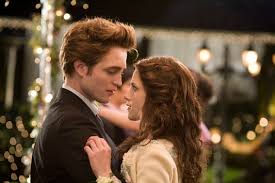 I think the archetype of the vampire have it close to being correct: blood is the basis for life and power. So, indulge me for a brief moment to consider our current glorification of a monster whose dependence on blood leaves people dead, who can't or won't accept death. The representation of these vampires are in many ways, super-human. But it is their constant preoccupation with blood that is of most interest to me. They consume it to fuel a kind of wakeful deadness because they know while the blood gives life, it also makes them cursed to live lonely lives separated from humanity. The weak succumb and lose their humanity, the strong resist because they remember who they are -- humans.
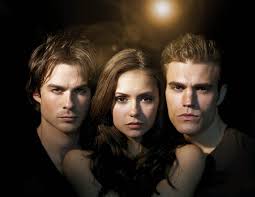
What does this say about the masses who consume the vampire myth and along with it, the not so palatable idea of blood? Perhaps we also long for a type of power that no longer seems accessible to us, the kind that makes us strong, alive, and beautiful. I think this type of power still exists in a much more tangible way, one providing inner power. It has the ability to transform a wayward individual to one with purpose, vision, and more importantly, greater peace than she has ever known. Perhaps this type of power enables one to surmount some indescribable challenges.
Freedom?
I don't know what it is like to be completely free of needs and wants. Sometimes I can't imagine having power and peace. Sometimes I struggle just to get out of bed and the long list of things I have to do can seem tedious, boring, and really pointless (washing the car, doing taxes, cleaning my room, or taking out the trash .. these tiny life things). But there are moments when I am sipping a cup of tea, cross country skiing in the stillness of the woods, listening to my nephew talk, remembering the cherished moments and conversations with friends and family, laying on the grass, running so hard my lungs gasp for air or simply absorbing something like a song or the stillness around me that there is this indescribable peace. Maybe this peace is freedom, not free of anything, but knowing I am who am I. Does that make sense? Does it make sense that I can be poor or imprisoned or sick or oppressed, but be at peace and completely free?
The Questionable Meaning of Freedom
It occurred to me that often times the notion of freedom has been linked with reason, the personal sacrifice of soldiers, and a sense that somehow we've earned it. Reason based on the Habermasian sphere, while enabling a particular type of action, is critiqued by the culturalists -- as lacking culture. But when we look at culture or horrifically at religion expressed in cultural practices, we do not like what we see. Some of us blame religion and culture as the foundation for genocides. Some of us blame reason as the iron cage of our existence. Stalemate. What is freedom? Is it simply to live? Can we be free in an iron cage? Can we be free in a totalitarian regime? What is freedom?
We want to claim freedom as expression of human effort found in a political structure. What want to associate freedom with being able to do what we want. And this seeming freedom is equated to happiness. But a child who does whatever she wants is the most miserable. She is a slave to herself. For those living in seemingly democratic nations, we are internally chained, internally captivated to ourselves. Living in a democratic society does not mean we are personally or individually free. We have equated democracy with freedom.
For those Canadians who have never known what it means to live under a dictator, we equate the lack of freedom to economic, social and perhaps, if we're insightful, maybe psychological freedom. We understand freedom as the ability to do what we want, when we want to. We equate freedom with choices. But these definitions of freedom, while somewhat accurate, are really the by products of capitalist societies. Consequently, in the last few years during the economic recession, our news saturated us with the dreary news that our societies are facing a crisis -- and a crisis it was: a threat to the number of choices we had in cars, companies to choose services from, and the government response was to bail out large corporations. Our society tends to think we are free because we live in a particular democratic nation. But we are not really free, just free to buy. Consumer Society and Faith?
Some of the unpleasant and sometimes dangerous consequences of our faulty definitions of freedom are: first, we, in the West, often think: "those developing nations" need our help; they need our Western knowledge; and they need us. And why not, we are saturated with the idea the idea that "they" have nothing to offer us. Second, for those who feel they are enlightened, postmodern thinkers, we act like consumers. We may be selective and embrace something like yoga without really understanding any of the teachings. Like the woman in Eat, Pray, Love, some of us believe we are enlightened, above the masses, but really we are consumers in a market place, selecting spiritual disciplines that make us feel good, but we reject anything that might be difficult, challenging, or require discipline and study. So, we deceive ourselves: we are not enlightened, we're just consumers. For some Christians, we act as consumers of our faith: we like the fact that Jesus saves and loves us. We don't like the word SIN -- it makes feel like we have to deny ourselves or that we have done something wrong; we are not sure what forgiveness really means and even if we did, it is hard to do so; we don't like discipline because it takes time; and some of us have never really read the Bible. We carry it around and we may able to quote some nice verses, but we really don't know know a personal Jesus. We are consumers.
Vampires and Blood: Towards An Understanding of Freedom
What does this say about the masses who consume the vampire myth and along with it, the not so palatable idea of blood? Perhaps we also long for a type of power that no longer seems accessible to us, the kind that makes us strong, alive, and beautiful. I think this type of power still exists in a much more tangible way, one providing inner power. It has the ability to transform a wayward individual to one with purpose, vision, and more importantly, greater peace than she has ever known. Perhaps this type of power enables one to surmount some indescribable challenges.
Freedom?
I don't know what it is like to be completely free of needs and wants. Sometimes I can't imagine having power and peace. Sometimes I struggle just to get out of bed and the long list of things I have to do can seem tedious, boring, and really pointless (washing the car, doing taxes, cleaning my room, or taking out the trash .. these tiny life things). But there are moments when I am sipping a cup of tea, cross country skiing in the stillness of the woods, listening to my nephew talk, remembering the cherished moments and conversations with friends and family, laying on the grass, running so hard my lungs gasp for air or simply absorbing something like a song or the stillness around me that there is this indescribable peace. Maybe this peace is freedom, not free of anything, but knowing I am who am I. Does that make sense? Does it make sense that I can be poor or imprisoned or sick or oppressed, but be at peace and completely free?
The Past: Childhood Memories of Blood and Life
This past week's theme for reading was on blood (Lev. 4:1-35; Luke 22: 1-71, Romans 5:1-21, Heb. 9:1-28). As I initally wrote my blog on my blood, I could not, for the life of me, keep on one singular topic because there was so much to talk about, so I've decided to take one very long blog on blood and break it into several parts: past, present and future.
There were a number of things that stood out for me and maybe this is just God teaching me that often times complexity is unavoidable and that life has way of revealing all the layers of ourselves and what it means to love him and to love others. I begin with my understanding of blood in terms of sacrifice.
Chicken Blood and Other Sacrifices
As a young child of six years old, I watched my parents slaughter chickens and I remember the distinct smell, texture, and colour -- a heady warm red so deep that wax crayons could not imitate. They drained the chickens' blood into a large bowl by slitting its throat and holding the chicken's body and neck. However, no matter how careful my mom and dad were, there was always blood on their hands, on the feathers of the chickens, and on the newspapers they spread on the floor. My sister had the poor habit of naming these chickens and at dinner time, she could not stand to eat one bite of her friends.
Blood is a part of our life source. It cost something for us to live.
When I grew older, the sight of blood did not bother me. I watched my parents prepare enough raw meat in our restaurant to understand that something had to die so that our dinner table was filled. My parents worked 14 hour days and the five children literally grew up in the restaurant. The restaurant became so much a part of me that even when I moved away from home to attend university, I would pick up the telephone and say, "Hello Carstairs Inn". My parents worked hard. Life was sometimes very hard, painful, confusing, and for me, full of anxiety. Sacrifice was necessary so that our family could grow. Each person in my family sacrificed something. The eldest, I think, lost something and I don't think he has been able to find it.
I am familiar with sacrifice.
A History of Sin
In this week's reading I have not read a thorough description of sin. I have only read the cost or price for sin. And without an understanding of sin, the discussion on the price for sin seems ridiculous. Why trade a life -- an animal life as it is -- for one person's sin? I think our society would have us believe there is no such thing as sin and no such thing as evil. Our society would have us believe there is only grey, the unavoidable mistake or the accidents or poor choices that just happens to harm us or create great pain and sorrow. And strangely we want that to be real, but when mass murders, genocides, violence against children, animals, the elderly, the oppressed occur, we are reminded that sin and evil are so real. The history of humanity is littered with our wilful amnesia of sin. When we forget the meaning of sin, we also forget the need for forgiveness, repentance and reconciliation.
But there is such a thing as sin. In Israel's history, the personal sin of one person had community wide ramifications that often led to misfortune, war, plagues and death. And we read throughout scripture that sin was based on human pride, arrogance, selfishness, greed, lust, anger, jealousy, and hatred. These base feelings, as Aristotle calls them, separates us not only from God, but it continues to create divisions within our communities and families. These elements of who we are -- and they are a part of us -- isolates us within ourselves; it becomes destructive to the person we are and to the people around us.
The Need for Blood and Sacrifice
Leviticus describes a process of sacrifice that is both personal and community oriented -- all necessary because sin is not only destructive to the the individual, but to the community as well. In Lev. 4:1-35, we see a description of this constant sacrifice: livestocks being offered for unintentional and intentional sin. Blood was the requirement for sin. Sin was so intolerable in the relationship with God that it required the sacrifice of life in order for the sinner to live amongst her people and with God. There is a price to be paid for sin. Once it has been paid, the individual can be restored, renewed and reconnected to their community. It does not means she is innocent, but she can perhaps begin again; she is free.
But the problem with most people is that we tend to live our lives somewhere between a life full of guilt and shame or a life in complete denial of our sinful nature. We are then prone to repeat our actions .. name any sin here. We are prone to fall again. And realistically, why not. Sometimes it easier to give in to that side of ourselves -- after all it is just personal, nobody else's business. Denying ourselves seems so problematic at a time when everything in our society feeds this impulse for gratification. But what we don't realize is that the more we feed our sins, the hungrier we become, the more depleted and less connected we are to our friends. We live lonely lives -- lives so cut off from our community that we either forget that it exists or try to replace it with something that never reminds us of what is good. What it means to have fellowship, friendship and vibrant community. Sin will cut this from us and our lives will become shadows of what it is meant to be.
And we are meant for something more. Perhaps one day we will realize that blood has been sacrificed and this sacrifice frees us.
And what about you, are you free?
Monday, 23 January 2012
1John 3:1-24 What is Love?
I've been meaning to start a blog for a long time, but decided that blogging about my work meant that I would be working. Then today, Jim, one of the individuals in our Bible reading group suggested we perhaps attempt a blog as a way to involve discussion. Well, why not, I have a lunch hour to write down my reflections on today's reading.
The theme approach involves taking particular passages from the Bible and simply orienting the reader to a particular topic. While the passage may have many different themes, ideas, and meanings, I'll contain my reflections on the one topic.
Today's reading for me was love 1John 3: 1-24.
Here is what stood out for me:
Two Aspects of Love
God's love makes us his children. The love of God means we belong to him first and foremost. "How great is the love the Father has lavished on us, that we should be called children of God!" 3:1
I think this love enables two very important things: first, as children of God, an identity that is rooted in God. This identity supersedes an identity based on culture, family, language, and even location. At a time of global turmoil over cultural clashes, often over religious differences, this love supersedes our differences. We belong to him -- all of us. And for those us broken by our past, by faulty human love, this love also centres us as to our real heritage. We belong to him.
Second, if we accept the love of God as real, it requires a response from us: we turn from sin (3:6), purify ourselves (3:3), do what is righteous (3:7), love others (3:10) - to the point we would lay down our lives for our sister and brother (3:14). This is perhaps the most difficult aspect of being loved and loving someone. It requires something of us. I'm challenged by John's writing because this type of love is NOT fluffy. I think many times in the movies, and even in urban stories, the type of love we see being reflected is one of self gratification -- that is -- does it "feel tingly" or "good" for me right now? Mass media love does not require purification, discipline, or doing what is right -- or the type of sacrifice that is asked of us. Here love requires something of us -- even to the point of death.
It is interesting that the first part of love directly talks about the individual's relationship with God and the second aspect of love involves the individual relating to God and to others within their community. Love spreads from God to a person and radiates from the person outwards.
A Challenge to Love
So what about me, how do I love? How do you love? To be perfectly honest, I'm not sure I have the strength to lay my life down for my brother or sister -- the one sitting 2 pews down from me -- on a daily basis. If she fell into the river on a -40C Winnipeg day, I would call 911 and do everything I can to bring this person to safety. I would give her my coat, my money, and even the hot tea in my bag. However, this would be a one day event. But what if this was required of me everyday on a smaller scale? Could I love someone I don't know at all? How about loving the person who hurt me? Or the person who hurt my family? Or the person who caused harm to an entire community? And there, I think, is the rub, loving sacrificially on a day to day basis is more difficult. Loving someone who has hurt me is even more difficult. Loving someone who is the enemy of humanity seems kind of twisted. However, we are called to love and there is no exception to this call. It will require everything in us, and mostly the grace of God, to do so because, at times, we will feel our hearts clenching, our eyes watering, our bodies retching in pain from memories / words, the scars of so many things, and everything in the world will tell us that it is not reasonable to love this person. And in those moments, when we are curled up and dying to ourselves, we may just see God.
My lunch hour is now over and I must get back to work. Your thoughts?
Subscribe to:
Posts (Atom)